Sales Automation
Automate your sales operations. Increase revenue without increasing effort.
Describe your sales workflow to Turbotic Automation AI, and Turbotic Orchestration governs, monitors and scales it in production — backed by an AI-native service team that builds and runs it with you.
What is sales automation?
Sales automation helps teams eliminate repetitive tasks, connect sales systems, and ensure consistent execution across the entire sales lifecycle. With Turbotic Automation AI, you describe the sales process you want, and the platform builds and runs it — while Turbotic Orchestration governs, monitors and scales it across your organisation.
- Trigger workflows from pipeline or customer events
- Sync and update CRM data automatically
- Automate follow-ups and outreach steps
- Govern opportunity progression centrally as it scales
Explore sales automation solutions
Discover how sales teams use automation and Turbotic Orchestration to sell faster, more consistently, and at scale.
Lead qualification & routing
Opportunity follow-up & progression
CRM data automation
Outreach & sequencing workflows
Proposal & document automation
Sales handoff & onboarding triggers
Pipeline monitoring & alerts
Customer lifecycle automation
Use case
Automated opportunity follow-up & pipeline progression
Every opportunity progresses automatically — no missed follow-ups, stalled deals, or outdated CRM data.
The problem
Sales reps manage many opportunities simultaneously. Follow-ups are delayed, next steps are missed, CRM data becomes outdated, and deals stall in the pipeline. Managers lack visibility, and revenue opportunities are lost due to inconsistent execution.
The automation
With Turbotic Automation AI, you describe the process once:
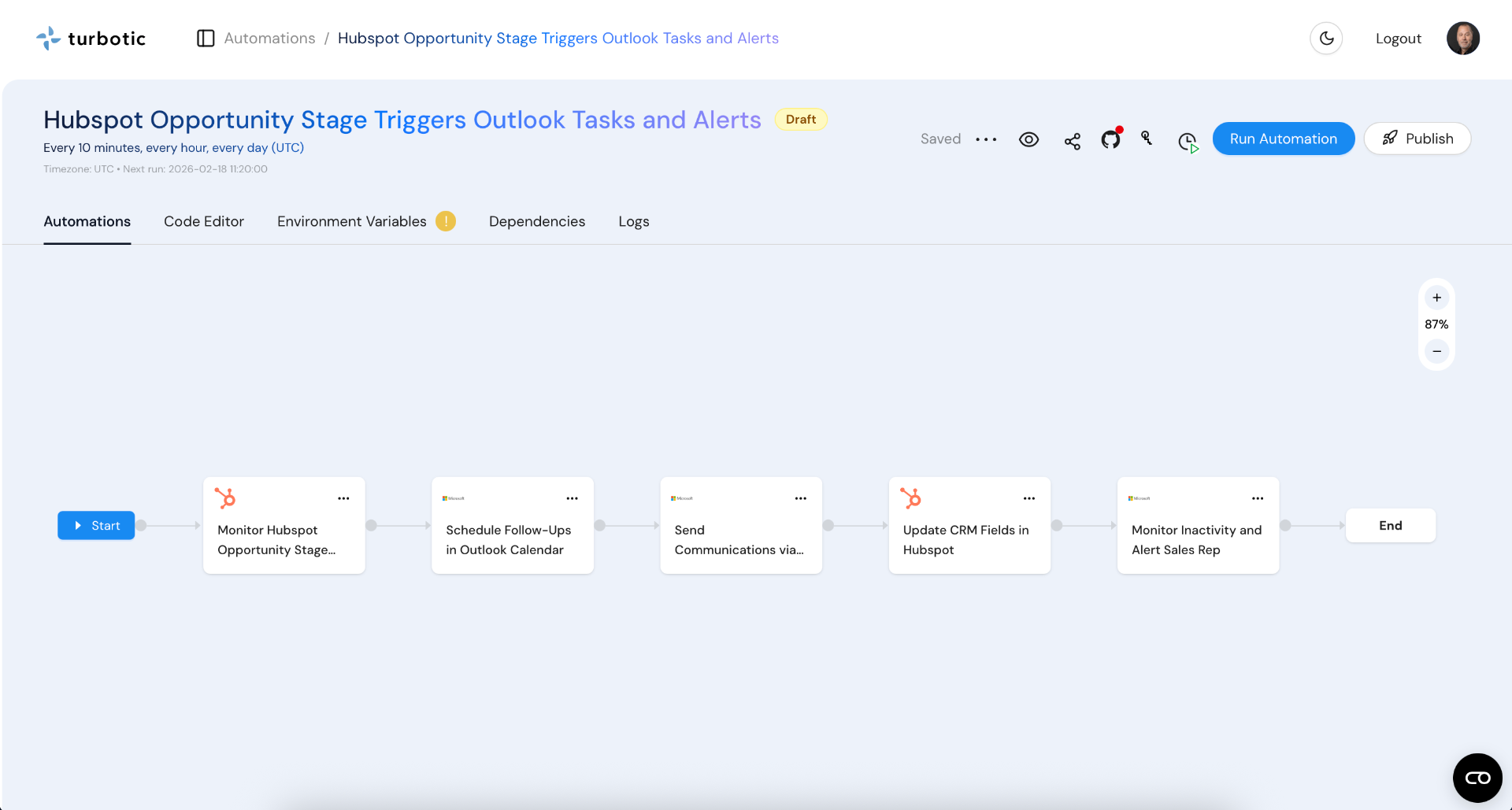
"When an opportunity enters or moves stage, schedule follow-ups, send the right communications, update CRM fields, and alert the rep if no activity happens."
Automation AI builds and runs the workflow, and Turbotic Orchestration keeps it governed across your sales stack.
What the automation does
- Detects new opportunities and stage changes
- Schedules follow-up tasks automatically
- Sends personalised emails or sequences
- Updates CRM fields and next-step dates
- Notifies reps and managers of inactivity
- Triggers reminders before deadlines
- Logs activities automatically
- Escalates stalled opportunities
Outcome metrics
- Faster deal progression
- Higher follow-up consistency
- Increased conversion rates
- Cleaner, accurate CRM data
- Fewer stalled opportunities
Your pipeline moves automatically from stage to stage.
Why automate your sales?
Increase selling time
Eliminate manual CRM updates and administrative work.
Improve consistency
Ensure every opportunity follows the right, governed process.
Prevent lost deals
Automated follow-ups keep opportunities moving.
Scale revenue
Manage more deals without increasing headcount.
How to automate your sales workflows
Identify repetitive sales processes (like follow-ups or CRM updates)
Describe the automation to Turbotic Automation AI
Connect your CRM and sales tools
Launch, then let Turbotic Orchestration govern and monitor it in production
No coding required — Turbotic's AI-native service team helps you go from pilot to production.
Sales automation in action
Sales teams use Turbotic Automation AI and Turbotic Orchestration to:
- Progress opportunities automatically
- Trigger outreach from pipeline events
- Maintain clean CRM data
- Monitor and prevent stalled deals
- Automate sales workflows end-to-end under governed controls
Sales operations run continuously without manual tracking.
Sales automation FAQs
One platform for end-to-end sales automation
Turbotic Automation AI connects your sales stack and builds the workflows, while Turbotic Orchestration governs and scales what runs.
- CRM and pipeline systems
- Email and outreach tools
- Calendar and meeting tools
- Sales engagement platforms
- Collaboration and notification tools
Automation runs across your entire sales lifecycle.
Start automating your sales today
Create sales workflows with Turbotic Automation AI. Automate opportunity progression. Increase revenue with the Turbotic Automation AI platform.
Hear us. Meet us. See us.
Our latest thinking, and where to find us in person.
 Upcoming
Retail Supply Chain & Logistics Expo
Meet the people shaping smarter retail operations, logistics and supply chains through AI and automation.
 Upcoming
Techarena 2027
Turbotic returns to Scandinavia’s meeting place for technology leaders, founders and investors.
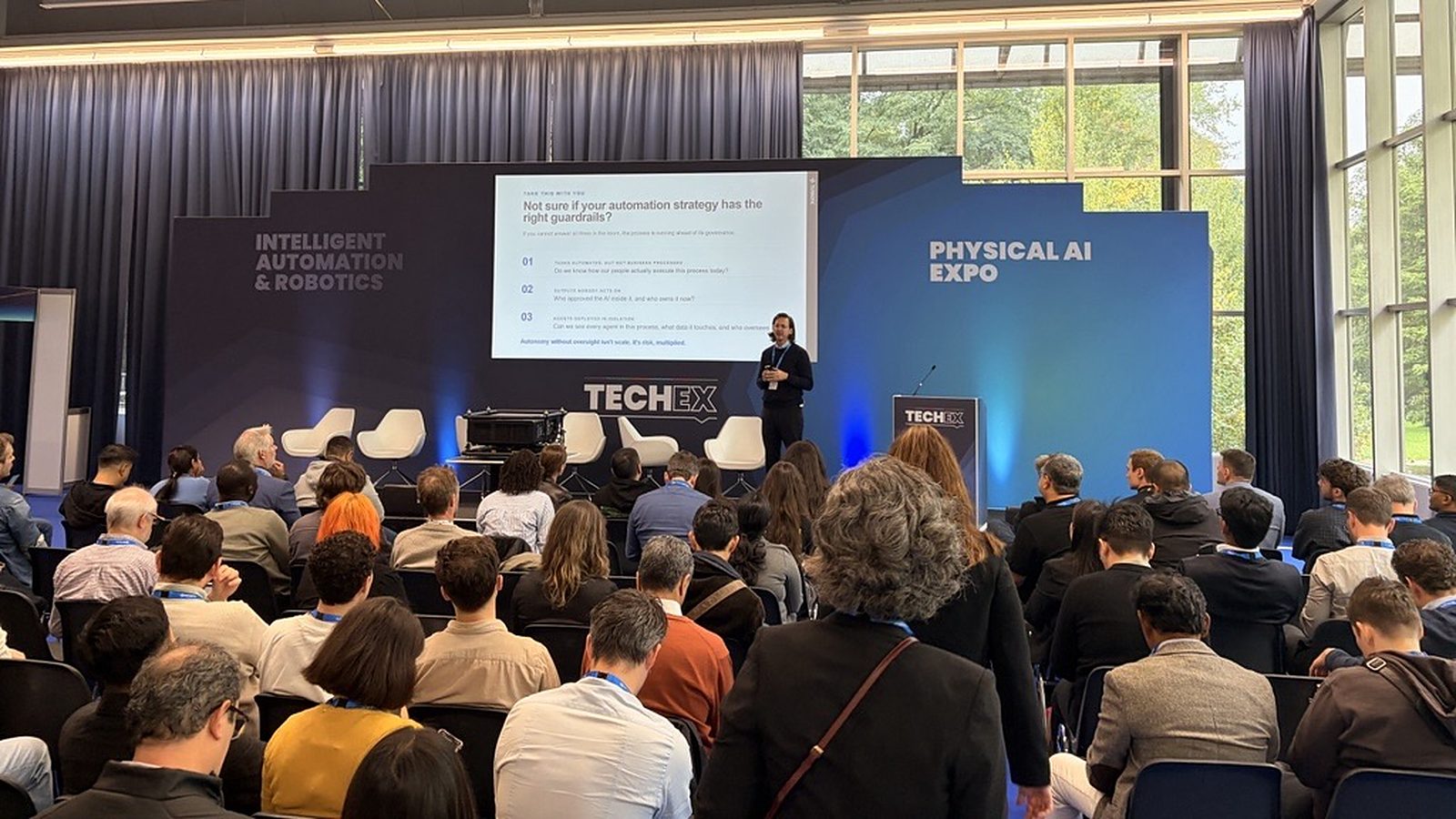
New technology, same problem – reflections from TechEx Amsterdam
Two days at TechEx Amsterdam confirmed it: the models are new, but the hard part is still the journey from pilot to shareholder value. Four takeaways on shadow AI, governance and running AI in production.

TechEx Europe
Join enterprise technology leaders exploring AI, automation, data, cyber security and digital transformation.

Governance Is the #1 Barrier Keeping UK AI Stuck in Pilot
New Turbotic research finds governance and compliance is the top barrier stopping UK businesses from moving AI beyond the pilot stage — and only 16% say they are deploying AI at scale successfully. Here's what's holding them back and how to fix it.

Shadow AI isn't an employee problem. It's a leadership problem
Shadow AI exposes businesses to risks. Turbotic CEO Theo Bergqvist explains why leaders must prioritise visibility, governance and trust over blanket bans.

Governance tops list of barriers holding back UK AI pilots, research shows
Governance and compliance is the most commonly cited barrier to moving AI beyond the pilot stage, identified by 37% of UK businesses, according to new research from Turbotic.

Governance tops list of barriers holding back UK AI pilots
Governance is the leading barrier holding UK AI pilots back, according to new Turbotic research — ahead of proving ROI and closing skills gaps.

Governance concerns hold back UK businesses from scaling AI beyond pilots
Governance, ROI proof and skills gaps are the top barriers stopping UK businesses scaling AI beyond pilots, new Turbotic research finds, with only 16% deploying it successfully at scale.